8 Min Read
Planning a kitchen remodel means making many decisions that affect one another. Cabinets, countertops, backsplash, flooring, hardware, and lighting may seem like separate choices at first, but they all have to live in the same room. The fact that you are thinking about how those materials work together now is a good thing. It means you are not just picking finishes you like on their own; you are thinking about how the whole kitchen will feel once everything is installed.
In this post, we will walk through how to mix wood, stone, metal, cabinet finishes, countertops, backsplash, texture, and lighting so your kitchen feels balanced instead of pieced together.
On this page:
- Why Mixing Materials Creates a More Timeless Kitchen
- Start With a Clear Plan Before Choosing Finishes
- A Simple Framework for Mixing Materials Without Clashing
- Popular Mixed-Material Kitchen Combinations
- How Lighting Affects Mixed Materials in a Kitchen
- When to Keep It Simple
- Mistakes to Avoid When Mixing Materials
- Bring It All Together With a Plan

Why Mixing Materials Creates a More Timeless Kitchen
A kitchen where every surface is the same color, texture, or finish can feel flat. On the other hand, a kitchen with too many competing materials can feel chaotic. The sweet spot is somewhere in the middle.
Mixing materials gives your kitchen depth. Wood can add warmth. Stone can bring structure and movement. Tile can add texture. Metal can create contrast and polish. When those materials are chosen intentionally, the room feels collected instead of overly coordinated.
This is especially important if you want a kitchen that will age well. A timeless kitchen usually has a strong foundation: a simple color palette, durable materials, and one or two standout elements. It does not rely on every trend happening at once.
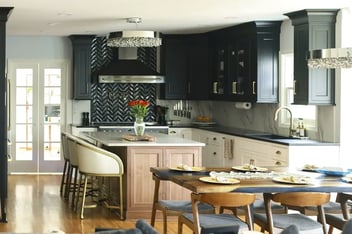
For example, a wood-and-stone kitchen can feel classic, modern, rustic, or transitional depending on how the materials are used. White oak cabinets with soft quartz feel light and natural. Walnut cabinets with dark stone feel rich and dramatic. Painted cabinets with a wood island feel approachable and balanced.
The materials do not have to match. They just need a reason to be there.
Start With a Clear Plan Before Choosing Finishes
One of the easiest ways to get overwhelmed during a kitchen remodel is to start by falling in love with individual finishes.
You see a countertop slab you love. Then a cabinet color. Then a backsplash tile. Then a light fixture. Each one looks great on its own, but when they are placed together, something feels off.
That is why your first step should be creating a direction for the whole room.
Before selecting materials, think through:
- Do you want the kitchen to feel warm, bright, bold, traditional, modern, or organic?
- What existing finishes in your home need to stay?
- Is there a wood floor, trim color, or architectural detail that should influence the palette?
- Do you want one dramatic focal point or a quieter, more layered look?
- How much maintenance are you comfortable with?
Early planning is what keeps material selections from feeling overwhelming. Since cabinets, countertops, backsplash, flooring, hardware, and lighting all play off each other, it helps to have someone looking at the big picture from the beginning. Tradeworks Remodeling can help homeowners think through those decisions in the right order, so the final kitchen feels intentional instead of assembled one choice at a time.
A Simple Framework for Mixing Materials Without Clashing
Once you have a general direction, the next step is deciding what role each material should play. The key to mixing materials in kitchen design is giving each material a clear role.
A helpful way to think about it is to choose one dominant material, one supporting material, and one or two accents.
For example, painted cabinets might be the dominant material, a wood island could be the supporting material, and brass hardware or lighting could be the accent. In another kitchen, natural wood cabinets may take the lead, with stone countertops and matte black fixtures adding contrast.
The materials should not all be fighting to be the star. Once you know which material is leading the design, it becomes easier to make decisions about the rest of the kitchen.
If you are still figuring out what style feels right, browsing completed projects in our portfolio can help you see how different materials work together in real homes.
Cabinets and Countertops: Coordinate First, Contrast Second
Cabinets and countertops do not need to match exactly. In most kitchens, they should coordinate. Contrast can be beautiful, but it should feel intentional.
White oak cabinets, for example, often pair well with soft white quartz or quartzite because the lighter countertop helps the wood feel less heavy. Painted cabinets can handle more movement in the countertop if the cabinet color is quiet.
If you are interested in mixing wood and granite countertops, pay close attention to the granite’s undertone. Warm gold, brown, or cream tones usually pair more naturally with wood, while cooler gray, white, or black movement may work better with painted cabinets or darker stains.
The main takeaway: cabinets and countertops should be selected together, not separately.
Cabinet Finishes: Give Each Finish a Job
Two cabinet finishes can look great in a kitchen. More than that can get complicated quickly.
A common approach is to paint the perimeter cabinets and have a stained wood island. Another option is a wood pantry wall with painted main cabinets. What matters is that each finish has a purpose. If the island is the feature, let it be the feature. If the pantry wall is wood, keep the rest of the cabinetry quieter.
One practical tip: keep the cabinet door style consistent when mixing cabinet colors or wood tones. That gives the kitchen a sense of order even when the finishes vary.
Countertops and Backsplash: Let One Be Quieter
The countertop and backsplash sit right next to each other, so they need to work as a pair.
When thinking through kitchen backsplash and countertop combinations, use this rule: if the countertop has a lot of movement, keep the backsplash quieter. If the countertop is simple, the backsplash can bring in more texture, pattern, or color variation.
A dramatic stone countertop may pair best with a simple handmade tile, a soft subway tile, or a slab backsplash in the same material. A plain quartz countertop can handle a more textured backsplash or an interesting tile layout.
Grout matters, too. High-contrast grout can make a backsplash feel busier, while low-contrast grout creates a softer look.
Metal Finishes: Repeat Them Intentionally
Metal should usually act as the accent, not the main event.
Two metal finishes are often enough. For example, you might use brushed brass for cabinet hardware and matte black for the faucet and lighting. Or polished nickel for plumbing fixtures and brass for pendants.
Stainless steel appliances do not have to dictate every finish in the room. They are usually neutral enough to work with black, brass, bronze, nickel, or chrome.
The trick is repetition. One black faucet by itself may feel random. A black faucet repeated in lighting, cabinet hardware, or window details feels intentional. The same is true for brass, bronze, nickel, or any other finish.
Avoid making every hardware, faucet, pot filler, pendant, sconce, appliance pull, and bar stool finish different. Mixed metals can look great, but they still need boundaries.
Texture: Add Interest Without Adding Clutter
A mixed material kitchen does not have to mean a lot of color. Texture can do much of the work.
Too many smooth, shiny surfaces can feel cold, while too many rough or matte surfaces can feel heavy. The goal is balance. Matte cabinets, polished stone, handmade tile, natural wood, and satin hardware can all create contrast without making the kitchen feel busy.
Texture is also a good way to warm up a modern kitchen. Clean cabinet lines, quartz countertops, and simple hardware can feel more inviting when paired with wood, handmade tile, or warmer lighting.
Popular Mixed-Material Kitchen Combinations
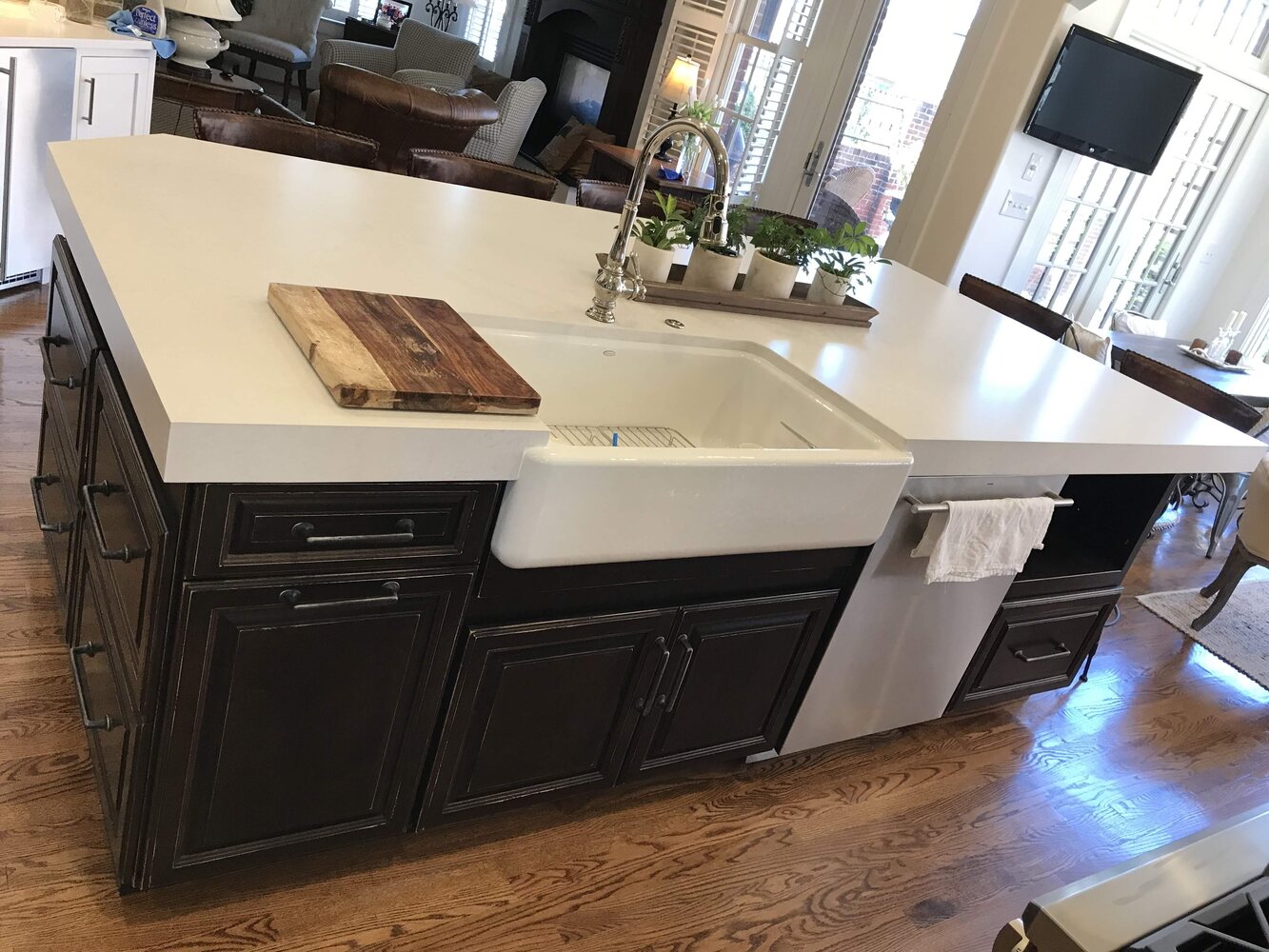
If you are looking for practical kitchen remodel material ideas, here are a few combinations that tend to work well in real homes.
|
Design Goal |
Cabinet Combination |
Countertop Pairing |
Backsplash / Metal Finish |
Why It Works |
|
Warm and timeless |
White oak island with painted perimeter cabinets |
White quartz or light granite |
Handmade-style tile with brushed brass |
The wood adds warmth while the painted cabinets keep the kitchen bright |
|
Bold and modern |
Flat-panel walnut or rift-cut oak |
Honed black granite or dark quartz |
Slab backsplash with matte black fixtures |
Clean lines and strong contrast create a polished look |
|
Classic with character |
White cabinets with a navy, green, or stained wood island |
Marble-look quartz or light stone |
Polished nickel or unlacquered brass |
The island becomes the focal point while the rest of the kitchen stays calm |
|
Organic and natural |
Medium-tone wood cabinets |
Soapstone, quartzite, or granite |
Textured tile and warm metal accents |
Great for homeowners who want a grounded, natural feel |
|
Light and layered |
Cream cabinets with a wood island |
Warm white or beige-toned countertop |
Textured tile and champagne bronze |
Soft contrast keeps the kitchen warm without making it feel dark |
These are not formulas you have to follow exactly. They are starting points. The right mix depends on your home, your natural light, your flooring, and how you want the kitchen to feel.
That is why we put so much emphasis on planning before selections are finalized. Our remodeling process helps homeowners step back, look at the full picture, and make material decisions in the right order, rather than choosing cabinets, countertops, backsplash, lighting, and hardware as separate decisions.
We often like pairing clean cabinet lines with a warm, natural element in a modern kitchen remodel in Louisville, KY. A modern kitchen can become cold quickly if every surface is sleek and hard. Wood, textured tile, and warmer metal finishes can keep it inviting.
How Lighting Affects Mixed Materials in a Kitchen
Lighting can completely change how materials look.
A cabinet color that looks soft and warm in a showroom may look yellow in your kitchen. A countertop that looks bright white under store lighting may look gray at home.
That is why samples matter.
Look at all of your materials together in the actual space when possible. Check them in morning, afternoon, and evening light. If your kitchen does not get much natural light, that should influence your finish choices.
Under-cabinet lighting also plays a big role. It can highlight backsplash texture, brighten prep areas, and make stone veining more visible. Pendant lights can warm up an island or make metal finishes stand out.
Practical lighting tips:
- Use under-cabinet lighting to make backsplash and countertop materials easier to see.
- Avoid bulbs that are too cool if you are using warm wood or brass finishes.
- Make sure island pendants support the overall style instead of introducing a totally unrelated finish.
- Test samples under the same type of lighting you plan to use in the finished kitchen.
Lighting is one of those details that is easy to overlook until everything is installed. Taking the time to look at your materials in the right light can save a lot of second-guessing later and help the finished kitchen feel like it all belongs together.
When to Keep It Simple
Sometimes the best design decision is to pull back.
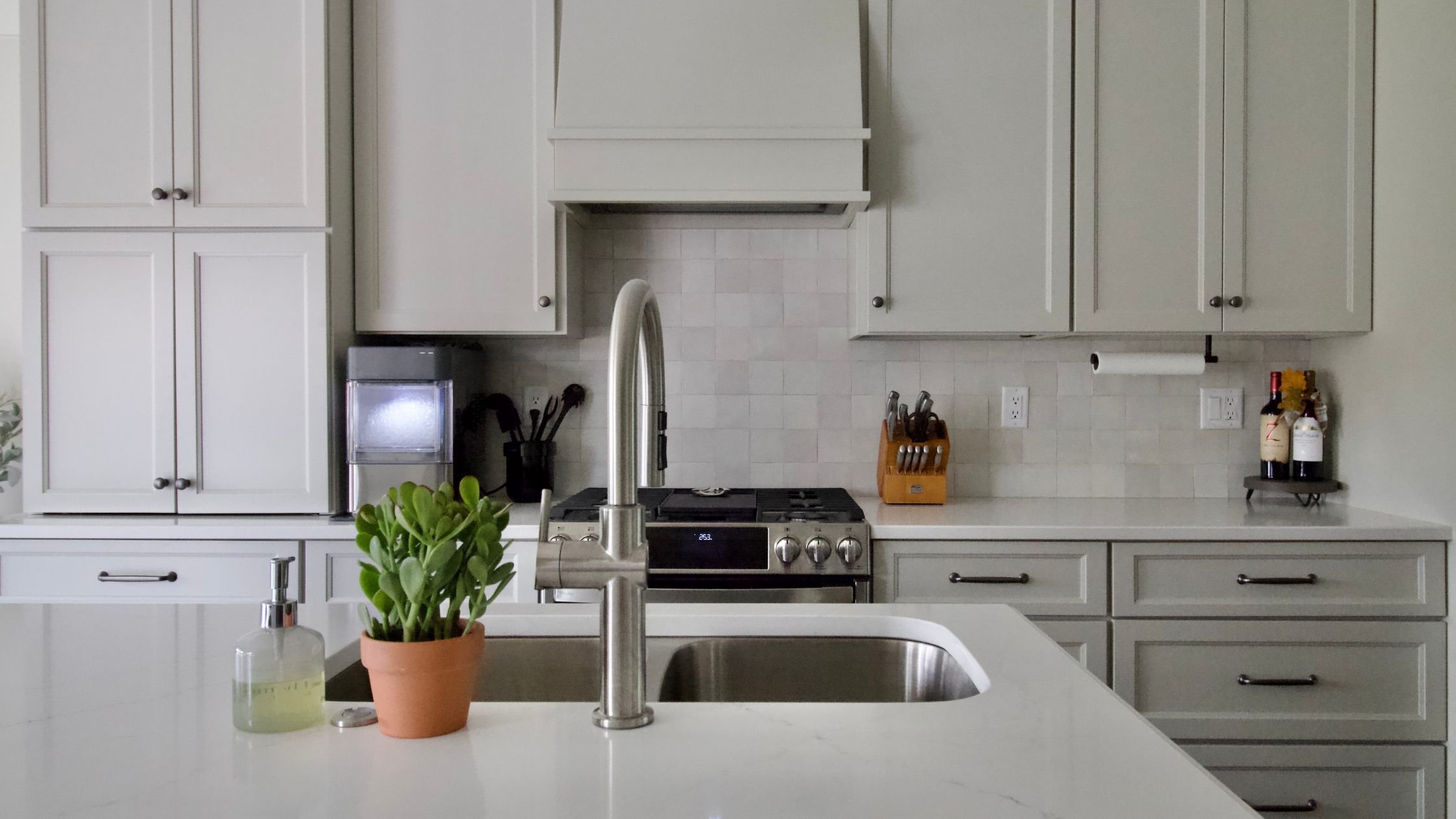
If your kitchen is small, too many materials can make it feel chopped up. If your countertop has dramatic veining, a simple backsplash may be the better choice. If your cabinets are a bold color, quieter hardware and countertops may help the room feel balanced.
Simple does not mean boring. It means the design has focus.
A kitchen with white oak cabinets, soft quartz countertops, warm lighting, and one beautiful tile can feel far more custom than a kitchen with five competing focal points.
The goal is not to use as many materials as possible. The goal is to use the right materials in the right places.
Mistakes to Avoid When Mixing Materials
A mixed-material kitchen works best when the design has discipline. Here are some common mistakes to avoid.
Choosing Finishes One at a Time
A cabinet sample, countertop slab, backsplash tile, and light fixture may each look good individually. That does not mean they work as a group. Always view materials together before approving selections.
Mixing Too Many Statement Pieces
If the countertop is bold, let it be bold. If the backsplash is the focal point, keep the countertop quieter. If the island is dramatic, the perimeter cabinets may need to step back.
Ignoring Undertones
Warm whites, cool whites, blue-grays, green-grays, creamy stones, orange woods, and yellow metals all have undertones. When undertones clash, the whole room can feel off, even if the materials are high quality.
Forgetting About the Flooring
Flooring is a major material in the kitchen. It affects cabinet color, wood tones, and countertop choices. If the existing floor is staying, it should be part of the material conversation from the beginning.
Overmixing Metals
Two metal finishes are usually enough. Three can work if one is stainless steel appliances, but beyond that, it takes a very careful eye.
Pairing Busy Countertops With Busy Backsplashes
This is one of the most common design problems. Movement needs breathing room.
Not Thinking About Maintenance
Some natural stones need sealing. Some cabinet finishes show fingerprints more than others. Some backsplash materials are easier to clean than others. Beauty matters, but daily life matters too.
Choosing Materials Without Thinking Through Cost
Material choices can quickly change the budget. Countertops, cabinet finishes, backsplash tile, hardware, lighting, and installation details all affect the final cost. Before getting too attached to a specific finish, it helps to understand how those choices fit into the bigger investment. Our Remodeling Cost Guide is a good place to start.
Bring It All Together With a Plan
Mixing materials well comes down to making each choice in context. Cabinets, countertops, backsplash, flooring, lighting, and hardware all affect one another, and the best combinations support both the home's style and the kitchen's functionality.
Tradeworks Remodeling brings the experience of a Louisville kitchen remodeling contractor to those early decisions, helping homeowners think through the big picture before selections are finalized. If you are planning a kitchen remodel in Louisville, KY, our team can help you sort through the options and create a space that feels balanced, practical, and personal to your home.
Contact us today to start your kitchen remodel.