7 Min Read
Flooring replacement in Louisville isn’t always the first or best answer when a room starts to look worn. In many older Louisville homes, existing hardwood may be worth repairing and refinishing. In kitchens, bathrooms, basements, or heavily used family spaces, a different material may provide better moisture resistance and easier maintenance.
At Trade Works Remodeling, we help you look beyond the visible surface. The condition of the boards, subfloor, adjoining rooms, trim, and larger remodeling plan all affect which flooring choice makes sense for your home.
What you’ll learn:
- Should You Refinish, Repair, or Replace Your Flooring?
- Flooring Options: Hardwood, Engineered Hardwood, LVT, Tile, And Laminate
- Hardwood Vs. LVT/LVP Vs. Tile: Side-By-Side Comparison
- What Flooring Works Best In Each Room?
- Flooring Replacement Cost In Louisville By Material
- What Professional Flooring Installation Should Include
- Frequently Asked Questions
- How Trade Works Remodeling Helps You Choose The Right Floor
Should You Refinish, Repair, or Replace Your Flooring?
The right choice depends on whether your flooring problem is cosmetic, isolated to a few boards, or connected to widespread moisture, movement, or subfloor damage.
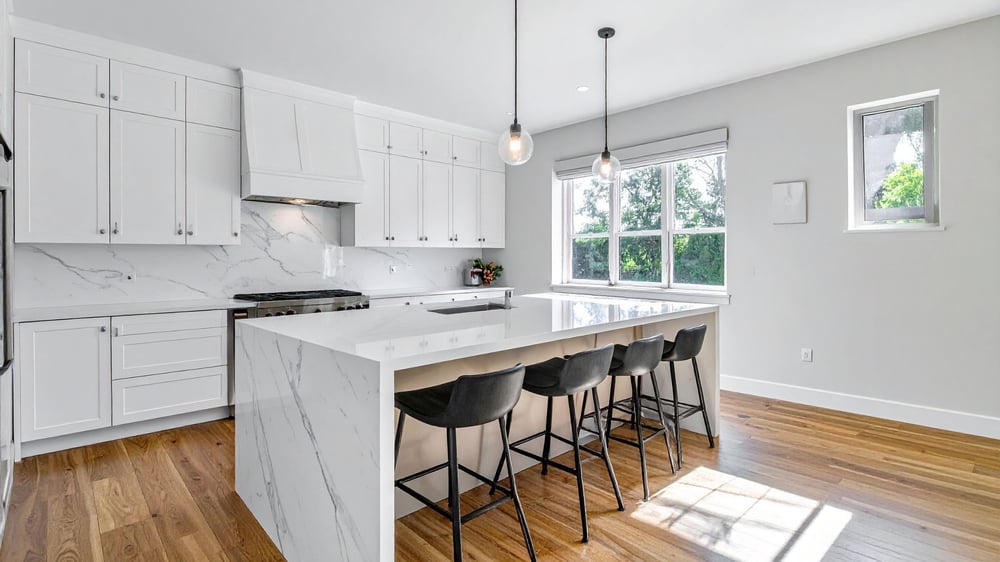
When Refinishing Usually Makes Sense
Refinishing is usually appropriate when the wood is structurally sound and most of the damage is limited to the finish.
A screen and recoat refreshes the existing protective finish without sanding the floor to bare wood. Full refinishing removes the old finish so scratches, discoloration, and unwanted stain color can be addressed more thoroughly.
Your hardwood may be a good refinishing candidate when:
- The finish looks dull or worn.
- Scratches haven’t penetrated deeply into the boards.
- Sun exposure has caused uneven fading.
- Most boards are flat, stable, and firmly attached.
- There’s enough wood remaining for another sanding.
When a Targeted Repair May Be Enough
A targeted repair can preserve an otherwise serviceable floor when the damage is limited to a small area.
Individual boards can sometimes be replaced after a leak, pet stain, deep gouge, or other localized problem. The repaired section may then need to be blended into the surrounding floor, which can involve refinishing a larger connected area.
Signs Replacement Is the Smarter Choice
Replacement makes more sense when damage is widespread, structural, moisture-related, or beyond the remaining sandable wood.
Consider replacing the floor when you find:
- Extensive buckling, crowning, or cupping
- Rot, mold, or persistent odors
- Widespread water damage
- A damaged, soft, or uneven subfloor
- Loose flooring across multiple areas
- Boards that have already been sanded too many times
When you’re evaluating flooring, your first decision should be identifying which layer of the floor has failed and whether that problem can be corrected without starting over.
Louisville Flooring Options: Hardwood, Engineered Hardwood, LVT, Tile, and Laminate
The best flooring material balances appearance, water exposure, comfort, repairability, maintenance, and the amount you’re comfortable investing.
Solid Hardwood Flooring
Solid hardwood offers natural character and strong, long-term repairability.
For homeowners comparing hardwood flooring in Louisville, KY, solid wood is often a strong fit for living rooms, dining rooms, bedrooms, and connected main-floor spaces. It can usually be sanded and refinished in the future, but it’s more vulnerable to standing water and moisture-related movement than vinyl or tile.
Engineered Hardwood Flooring
Engineered hardwood combines a real-wood surface with a layered core designed to improve dimensional stability.
It provides the appearance and texture of wood while handling certain humidity and installation conditions better than solid hardwood. Some engineered hardwood flooring can be refinished, but that depends on the thickness of the real-wood wear layer. The National Wood Flooring Association maintains a certification program for engineered products that are thick enough to be sanded and renewed.
LVT and LVP Flooring
Luxury vinyl offers practical water resistance, easy cleaning, and a wide range of wood-look and stone-look designs.
LVT generally refers to tile-shaped luxury vinyl, while LVP refers to plank-shaped products. Luxury vinyl plank flooring is popular in Louisville kitchens, basements, mudrooms, and pet-friendly spaces because it’s comfortable underfoot and relatively easy to maintain.
Remember that a waterproof flooring product doesn’t make an entire room waterproof. Water can still travel around edges, beneath planks, or into a damaged subfloor.
Ceramic and Porcelain Tile
Tile offers excellent surface durability and performs well in moisture-prone rooms when the substrate is properly prepared.
Porcelain and ceramic tile are common choices for bathrooms, laundry rooms, entries, and certain kitchens. Tile can feel harder and cooler underfoot than hardwood or vinyl, and grout requires periodic cleaning. It also depends on a flat, stable base to reduce the risk of cracking.
Laminate Flooring
Laminate creates a convincing wood or stone appearance at a lower initial cost than many natural materials.
Laminate uses a printed design layer rather than real wood, so it can’t be sanded or refinished. Product-level moisture resistance varies, making it important to match the specific laminate flooring to the room rather than assuming every option will perform the same way.
As you compare materials, Trade Works Remodeling’s project portfolio can help you see how flooring works with cabinetry, wall colors, trim, lighting, and adjoining rooms throughout a finished remodel.
Hardwood vs. LVT/LVP vs. Tile: Side-by-Side Comparison
Hardwood offers natural character and repairability, LVT offers easier maintenance and practical moisture resistance, and tile offers exceptional durability in wet or heavily used spaces.
|
Comparison Point |
Hardwood |
LVT/LVP |
Tile |
|
Best applications |
Living areas, bedrooms, dining rooms, connected main floors |
Kitchens, basements, mudrooms, family spaces |
Bathrooms, laundry rooms, entries |
|
Moisture tolerance |
Lower |
High at the product level |
High with correct installation |
|
Comfort |
Warm and natural |
Softer and quieter than tile |
Harder and cooler |
|
Repairability |
Boards may be repaired or refinished |
Individual planks may be replaceable |
Individual tiles may be replaceable |
|
Maintenance |
Routine cleaning and periodic refinishing |
Relatively low |
Surface cleaning plus grout care |
|
Relative investment |
Mid-range to high |
Low to mid-range |
Mid-range to high |
Choose hardwood when authenticity and future refinishing matter. Choose LVT or LVP when you want lower-maintenance flooring for an active household. Choose tile when moisture performance and surface durability are the main priorities.
What Flooring Works Best in Each Room?
The best flooring for a room depends on how often water, dirt, pets, spills, and heavy foot traffic will reach the surface.
Kitchens
The best flooring for a kitchen balances spill resistance, comfort, cleanability, and visual continuity with nearby rooms.
LVT, tile, engineered hardwood, and solid hardwood can all work in a kitchen. Your decision often comes down to how much water resistance you want, whether the kitchen opens into hardwood living areas, and how comfortable you want the floor to feel during daily cooking and cleanup.
Bathrooms, Laundry Rooms, and Mudrooms
Tile and LVT are usually the most practical choices for rooms with frequent moisture exposure.
The visible finish is only part of the system: underlayment, waterproofing details, transitions, appliance connections, and the condition of the subfloor all matter.
Living Rooms, Dining Rooms, and Bedrooms
Hardwood and engineered hardwood are strong choices when warmth, character, and long-term repairability are priorities.
LVP and laminate can also work well when you prefer simpler maintenance or need to manage the overall project budget.
Basements
Basement flooring should be selected only after moisture conditions have been evaluated.
LVT and tile are often more practical below grade than solid hardwood. Any active water intrusion or subfloor issue should be corrected before new flooring is installed.
Flooring Replacement Cost in Louisville by Material
Flooring costs depend on more than the price displayed on a sample because removal, preparation, layout, transitions, and surrounding finishes can change the final scope.
The following 2026 installed ranges are broad planning figures, not Trade Works Remodeling quotes:
|
Flooring Work |
Broad Installed Planning Range |
|
Hardwood refinishing |
$3 to $8 per square foot |
|
Solid hardwood |
$6 to $25 per square foot |
|
Engineered hardwood |
$7 to $20 per square foot |
|
LVT or LVP |
$4 to $22 per square foot |
|
Laminate |
$5 to $12 per square foot |
|
Ceramic, porcelain, or specialty tile |
$5 to $30 or more per square foot |
Material grade, wood species, installation method, and room size create wide cost differences. Hardwood and engineered wood may rise in price with wider planks, premium grades, or patterned layouts. Tile costs increase with specialty materials, complex patterns, and extensive substrate preparation.
Your estimate may also include:
- Existing flooring removal and disposal
- Subfloor leveling, repair, or replacement
- Moisture barriers, membranes, or underlayment
- Stairs, borders, and complex layouts
- Baseboards, shoe molding, and transitions
- Door, cabinet, and appliance adjustments
- Furniture moving and protection
For broader kitchen, bathroom, addition, and whole-home budgeting, download Trade Works Remodeling’s Louisville remodeling cost guide. It explains common remodeling ranges and what may be included at different levels of investment.
What Professional Flooring Installation in Louisville, KY Should Include
A complete flooring installation quote should account for the condition beneath and around the floor, not just the number of square feet being covered.
Before signing a proposal, confirm who’s responsible for:
- Final measurements and material quantities
- Removal and disposal
- Subfloor moisture, flatness, and damage
- Required leveling or repairs
- Underlayment and installation systems
- Layout, patterns, and sightlines
- Transitions between flooring materials
- Baseboards, trim, doors, and toe kicks
- Cleanup and final inspection
A big-box installation package may be reasonable for a straightforward, like-for-like replacement over a sound subfloor. The limitations become more noticeable when flooring connects to a larger kitchen, bathroom, or whole-home remodel.
When you’re comparing flooring companies in Louisville, KY, ask who will coordinate the complete scope if demolition reveals water damage, an uneven subfloor, damaged trim, or a height difference between rooms. A low product price doesn’t solve those conditions.
Trade Works approaches flooring as part of the entire room. Its remodeling process includes early conversations about your goals and budget, in-home planning, identification of potential construction challenges, and continued communication through the final walkthrough. That broader accountability can be especially valuable when flooring affects cabinets, plumbing fixtures, doors, stairs, or several adjoining spaces.
FAQs About Flooring Replacement in Louisville
How Long Does Hardwood Floor Refinishing Take?
Most professional hardwood refinishing projects take approximately three to five working days, followed by additional curing time.
The schedule depends on the size and condition of the floor, required repairs, stain selection, finish type, humidity, and ventilation. You may also need to wait before returning rugs, furniture, pets, and normal foot traffic to the room.
Can New Flooring Be Installed Over Existing Flooring?
Some new flooring can be installed over an existing surface, but only when the current floor is stable, flat, dry, and compatible with the new material.
Installing over an old floor can create height problems at doors, appliances, cabinets, stairs, and adjoining rooms. It can also conceal moisture or subfloor damage, so the existing conditions should be evaluated before the installation method is chosen.
Do I Need to Replace the Flooring in Every Connected Room?
You don’t always have to replace flooring throughout every connected room, but transitions should be planned carefully.
Keeping one flooring material across open living areas can make the home feel more cohesive. Different materials may make sense where room conditions change, such as moving from hardwood in a living room to tile or LVT in a bathroom, laundry room, or mudroom.
What Happens If Subfloor Damage Is Found During Flooring Removal?
Subfloor damage should be repaired before the new flooring is installed, even when that work wasn’t visible during the initial evaluation.
Moisture, rot, uneven sections, loose panels, or previous installation problems can affect the performance of the finished floor. Your contractor should explain what was found, present the repair options, and clarify any effect on cost or schedule before proceeding.
How Trade Works Remodeling Helps You Choose the Right Floor
Trade Works helps you evaluate how a flooring decision will affect the room, the surrounding finishes, and the long-term performance of your home.
Since 2016, the team has worked on whole-home remodels, kitchens, bathrooms, additions, and targeted home improvements throughout Louisville. Its work is guided by three principles: plan carefully, address problems proactively, and steward the time, money, and home entrusted to the team.
That means you’re not handed a product allowance and left to resolve the surrounding details. The team considers what needs to happen before installation, how the work should be sequenced, and how flooring will connect with the rest of your project.
You can learn more about the company’s background and values on the About Trade Works Remodeling page.
Plan Your Louisville Flooring Project With Confidence
The right flooring decision starts with understanding what you have, what’s underneath it, and how the room needs to perform.
Your existing hardwood may only need a thoughtful repair and refinishing plan. In other cases, new hardwood, engineered wood, LVT, laminate, or tile may create a better long-term result.
To discuss hardwood refinishing, flooring replacement, or professional flooring installation in Louisville, contact Trade Works Remodeling. We’ll help you evaluate the condition of your floor, compare the practical tradeoffs, and develop a plan for the complete space.